
The farm sector has been resilient to the COVID-19 shock and is estimated to grow at 3.9 per cent this fiscal, the Economic Survey said on Monday, while suggesting to the government to give priority to crop diversification, allied farm sectors and alternative fertilisers like Nano urea. The Economic Survey 2021-22 also pitched for increasing agriculture research and development (R&D) and organic farming, besides use of new technologies like drones. "The performance of the agriculture and the allied sector has been resilient to the COVID-19 shock. ...Growth in allied sectors including livestock, dairying and fisheries has been the major drivers of overall growth in the sector," the Survey said. The agriculture sector has experienced buoyant growth in the past two years.
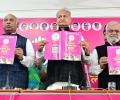
The fact that Gehlot has stayed relevant these five years with his populist schemes is one reason why he may beat incumbency in a state that votes for change every election, observes Ramesh Menon.

The formula for success of farm economy is very simple -- farmers should be able to produce more from the same piece of land at reduced cost while minimising risk and be connected to market to get higher realisation for their produce, points out Siraj Chaudhry.

Finance Minister Nirmala Sitharaman will kick start the customary pre-Budget consultation exercise with stakeholders from Wednesday by holding the first such meeting with experts of agriculture and agro-processing industry. She will be seeking inputs from various stakeholders, including industry bodies, farmer organisations and economists for reviving consumption and boosting growth hit by the COVID-19 pandemic. The growth this year is expected to be in the double-digit during the current fiscal.

Nirmala Sitharaman's messaging was clear when she presented a well-balanced Budget with an eye on state elections in nine states followed by a general election next year, observes Ramesh Menon.

The rating agency expects the Reserve Bank of India to continue its accommodative monetary stance.
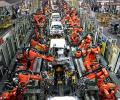
India's economy grew 6.1 per cent in the fourth quarter of 2022-23, pushing up the annual growth rate to 7.2 per cent, official data showed on Wednesday.

The growth in the contact-intensive portion of the economy trailed our expectation, highlighting how imperative it is for confidence to improve, either through accelerated vaccinations or otherwise, to drive a sustainable recovery in these sectors, asserts Aditi Nayar.

On the occasion of Chinese president Xi Jinping's two-day visit, Indian exporters are looking for a big boost in export of agricultural commodities, especially the ones that have been impacted by the ongoing trade war between the United States and China.

The initiative would provide double the relief announced by the states of UP and Maharashtra, the Punjab CM said.

A ramp-up in COVID-19 vaccination, healthy advance estimates of kharif (summer) crop and faster government spending were the factors which led to the revision, the agency said in a statement. It can be noted that after the 7.3 per cent contraction in 2020-21, there were expectations of a higher growth number in 2021-22.

In Phase 6, indications are that the BJP, which is defending 40 seats, will lose in double digits and gain in single digits. Not good, if you are the ruling party scrambling to earn a working majority, with just one phase left to go, argues Prem Panicker.

'It is time to allow the rupee to move towards its true value, as it is hurting Indian exports, investment and SMEs associated with export sectors that create jobs,' argues Pravakar Sahoo.

Prime Minister Narendra Modi's call to make this decade a "techade" for India and the push for 5G, semiconductors and transformation through digital services is going to boost the technology sector in the country, industry players said on Monday. Modi, in his speech on the 76th Independence Day, touched upon all-round development of technology in the country, from 5G to push for electronic chips, laying of optical fibre cable (OFC) network across villages and enablement of digital entrepreneurship in villages through Common Services Centres, making the present decade as "techade" for India. Homegrown mobile devices maker Lava International's Chairman and Managing Director Hari Om Rai said electronics and technology sectors create about $4 trillion of revenue.

The Union Budget on Wednesday outlined several initiatives to drive India's technology agenda and boost digital infrastructure, including new centres of excellence for artificial intelligence, National Data Governance Policy, and Entity DigiLocker.

A closer look at the data reveals that a lot of the items are not part of this calculation. The notable ones include buffalo meat, marine exports, raw cotton, and plantation crops such as tea, coffee, rubber, etc.

'Aquaponics can effectively cushion the impact of a calamity like COVID.'

Armed with necessary macro and micro growth drivers, India is on its way to becoming the fastest growing major economy in the world, a finance ministry report said. Rapid vaccination and teeming festivities will push India's ongoing recovery resulting in narrowing of demand-supply mismatches and greater employment opportunities, as per the monthly Economic Review prepared by the ministry.

US president Barack Obama new initiative to help millions of proud Indian-Americans directly invest in India's future.

Leading economists have pencilled in a high 13-15.7 per cent uptick in the economy in the first quarter of 2022-23 with an upward bias. Soumya Kanti Ghosh, the group chief economic adviser at State Bank of India, on Tuesday said he expects the GDP to clip past 15.7 per cent in the first quarter with more chances of the final numbers printing in higher, while Aditi Nayar, the chief economist at the rating agency Icra, said the economy will grow much lower at 13 per cent in the June quarter. The national statistical office will announce the first quarter GDP numbers later next week.

The World Bank report said Brand Northeast would build on elements such as healthy living, environmental sustainability, social responsibility, service orientation, among others.

The UN food agency has sought a political and financial push to boost sustainable agriculture in poor countries and double global food production, saying that such a move would forge a world of economic and social progress.
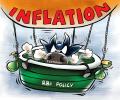
'Election years tend to see high government expenditure on unproductive schemes, though that money sloshing around can boost private consumption.' 'Again, it can mean higher inflation,' explains Devangshu Datta.

'In the long run, the boost to farmers' incomes must come from technological breakthroughs,' says Pratap S Birthal and Digvijay S Negi.

NDA government has shunned populism.

'We have all the technologies available, but it should be converted to something that can be commercially viable.'

Reading books will make you curious, build your imagination and nourish your brain into an organic super power.

Finance Minister Nirmala Sitharaman on Wednesday raised the personal income tax rebate limit, doled out sops on small savings and announced one of the biggest hikes in capital spending in the past decade as she did a tight rope walk in the Budget between staying fiscally prudent and meeting public expectations in the year before general elections.

'This confrontation could have been avoided by a less arrogant administration that initially listened, used whatever negotiating skills they had and tried to be more credible,' observes Ramesh Menon.
The four key risk areas India needs to focus on at the moment include economic security, energy security, agriculture and food security and national security, it adds. The WEC-CII report says many issues facing India in these four areas will require considerable long-term investment from both public and private sectors. 'Decision-makers in government and business will be forced to make trade-offs as to where spending and investments are allocated,' it said.

As India emerges from the COVID-19 crisis, the ninth budget under the Modi government, including an interim one, is widely expected to focus on boosting spending on job creation and rural development, generous allocations for development schemes, putting more money in the hands of the average taxpayer and easing rules to attract foreign investments.
Corporate leaders said a stable government at the Centre will help boost infrastructure spend, address agricultural distress, and encouraging employment.

Given the many policy areas where the Centre and the states have not been seeing eye to eye in the last few years, it is time the Modi government convenes a meeting of the Inter-State Council, recommends A K Bhattacharya.
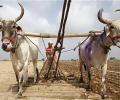
Agri experts are meeting FinMin ministry officials on Monday to give their inputs on the Budget.

Creation of 115 million non-farm jobs over next decade critical to sustaining growth, says McKinsey
Buoyed by an increase in public investment and incentives to boost manufacturing, India's economy is expected to grow by 8.3 per cent in the fiscal year 2021-22, less than the previous projection early this year before the country was hit by the second wave of the COVID-19 pandemic, the World Bank has said in its latest report. World Bank chief economist for the South Asia Region Hans Timmer told PTI here that when one looks at the high frequency data, they see that as a result of the second wave of the COVID-19 pandemic, the recovery paused, and some indicate that the recovery actually declined briefly. "We project for this fiscal year 8.3 per cent (growth rate for Indian economy) that is less than we projected early in the year before the health crisis caused by the second wave. "Given the sharp contraction of the economy last year, it might not look like a lot, but in my view, that is actually very positive news, given the violent second wave and the severity of the health crisis," he said on Thursday.

Highlighting the role of MSMEs in enhancing exports and helping the country achieve self reliance, Union Minister Nitin Gadkari on Monday said India does not need to import from China. "Already in automobile sector, in many sectors now, in agriculture, automobiles, everywhere, we have already found the solutions. Now we don't need to import from China," said the minister. He observed that India was exporting a lot of items instead of importing them.

Farmers have been availing crop loans upto Rs 300,000 at 7%.
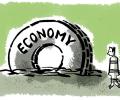
'Once the lockdown is lifted, we will see some pickup in demand.' 'And my sense is that it will be a long walk this time given that we have lost three months of economic activity.'

Investors are sceptical that the economy could have picked up so much steam.
